 Premium Shop

The Ultimate Guide to Collagen: Why Bioactive Tripeptides Are the Future of Structural Cellular Nutrition
When we talk today about vitality, firm connective tissue, and maintaining our physical structure as we age, one specific term almost inevitably comes up: collagen. In magazines, on social media, and in drugstores, it’s celebrated as the ultimate secret for firm skin, resilient joints, strong bones, and a youthful appearance. But with this gigantic hype, the market has become extremely confusing for consumers. It’s swarming with loud marketing promises about “Collagen Type I, II, or III,” plant-based collagen boosters, and supposed miracle cures that claim to turn back the biological clock overnight.
In this comprehensive, scientifically grounded guide, we consciously look behind the scenes of the marketing. We explain, based on facts, why the highly advertised “collagen type” on the packaging actually plays hardly any role during digestion, how your gastrointestinal tract truly processes structural proteins, and why modern science is now banking on a completely new, revolutionary evolutionary stage: Collagen Tripeptides.
Learn in detail how you can support the structural foundation of your entire body nutritionally, with high bioavailability, and intelligently—for noticeable, honest healthy aging from the inside out.
1. What Actually is Collagen? The Physical Framework of Life
To truly understand how we can optimally support our body and our tissues in everyday life, we first have to look at the biological foundation. Collagen isn’t just any nutrient—it is by far the most abundant protein in the entire human body. It makes up an astonishing 30 percent of our total body proteins.
To make the function of collagen tangible, imagine a gigantic, modern skyscraper. Before the walls can be built and the windows installed, the building needs a massive, flexible, yet extremely resilient steel framework. Without this framework, the building would collapse under the slightest stress. Collagen is exactly this steel framework for your body: Gigantic networks of collagen fibers run through our skin, form the firm structure of our ligaments and tendons, cushion our joints as cartilage, and even give our bones and blood vessels their vital stability and tensile strength. Collagen is, in a sense, the “biological glue” that physically holds us together.
The Biological Problem of Aging
In our younger years, especially during childhood and youth, the so-called fibroblasts (the highly specialized cells in our body that produce collagen) work at absolute full speed. They produce this structural protein in massive quantities, resulting in plump skin, extremely flexible joints, and rapid regeneration.
But biology has a catch: Already starting in our mid-20s, the body’s own collagen production begins to slowly but steadily decline—by an average of about 1 to 1.5% per year. That might sound like a little at first, but it adds up dramatically. By the time we reach the age of 50, the body has often already lost a very significant portion of its optimal, youthful collagen capacity. The once firm steel framework increasingly loses its resilience and density. This structural weakening makes itself felt for all of us: The skin loses its elasticity, the connective tissue becomes softer, and the structural resilience of our musculoskeletal system in everyday life decreases.
2. The Great Misconception: Why the “Collagen Type” on the Tub Hardly Matters
If you look around the confusing market for collagen products today, you’ll encounter the same prominent claims on almost all packaging: “Take Type I for beautiful skin, Type II for supple joints, and Type III for your muscle tissue.” This is one of the biggest and most widespread misconceptions in the entire supplement industry. We have to rigorously dispel this massive marketing myth right here.
From a purely anatomical perspective, it’s absolutely true that the human body consists of different types of collagen and that these are found in different tissues. But when you take a collagen supplement orally (meaning you drink or swallow it), this powder doesn’t simply wander directly into your knees or your face as “finished” skin or joint tissue as if by magic.
The Lego Analogy of Human Digestion
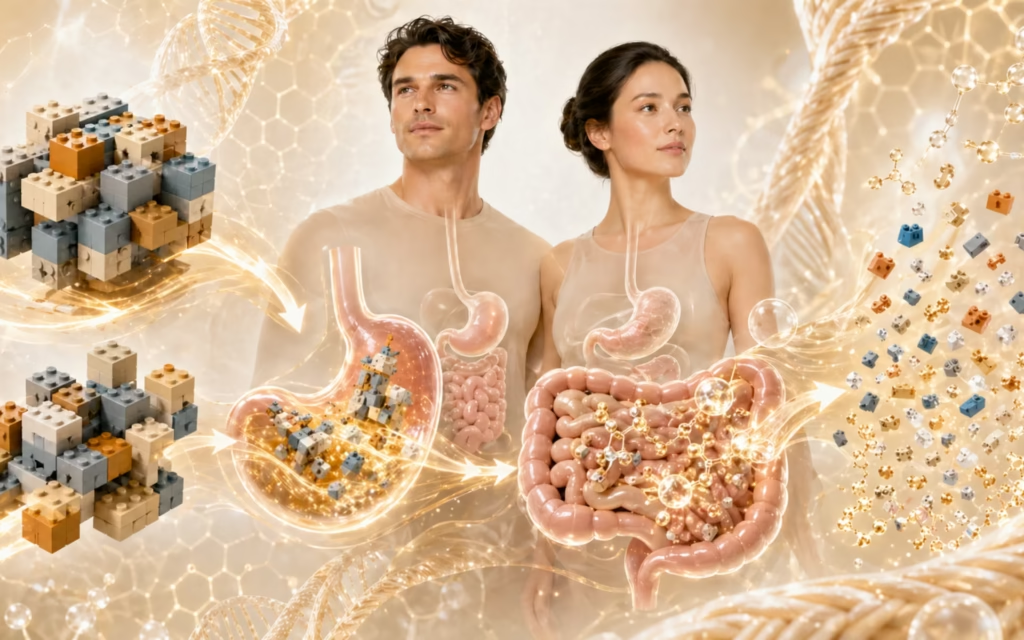
To make this highly complex process understandable, let’s use a Lego analogy: Imagine you buy a large, pre-built Lego knight’s castle (representing collagen Type I in the tub) and a detailed Lego spaceship (representing collagen Type II) at the toy store.
Now, when you consume this hydrolyzed collagen, it encounters aggressive stomach acid and pepsin (a digestive enzyme) in your stomach. After that, it travels into the small intestine, where more enzymes (proteases) are waiting. Your gastrointestinal tract has absolutely no interest in whether you delivered a knight’s castle or a spaceship. Its sole task is to mercilessly break this large structure down into its smallest individual parts: into the single, tiny Lego bricks (the so-called amino acids and small peptides).
Only when the huge construct is dismantled into millions of tiny individual bricks can the body absorb them through the intestinal mucosa into the blood. As soon as these universal building blocks are floating in the bloodstream, it’s absolutely impossible for the organism to trace whether the little red Lego brick originally came from the knight’s castle (Type I) or the spaceship (Type II).
The irrefutable conclusion of biology: Your body distributes these circulating amino acids strictly according to its own internal priority list, sending them exactly where it needs them most urgently. From these universal building blocks, the cells then build exactly the collagen type that the tissue is demanding at that very moment. The original type of the supplement (whether Type I, II, or III) therefore plays an absolutely subordinate role in its actual effectiveness. Far more decisive than the type is a completely different, scientifically elementary property: The physical size of the building blocks.
3. The Revolutionary Evolutionary Stage: From Normal Peptides to Tripeptides
Since we now know that our digestion has to painstakingly break everything down into small building blocks anyway to be able to absorb it at all, modern science asks the crucial question: How can we make it as easy, efficient, and energy-saving for the body as humanly possible?
Conventional collagen powders from the supermarket (often referred to as “hydrolyzed collagen peptides”) are indeed better than pure, unhydrolyzed collagen, but chemically speaking, they still consist of relatively long, clunky amino acid chains (often 30 to 50 amino acids long). When you consume these, your body still has to do an extreme amount of digestive work in the intestine and expend energy to further break down these long chains. During this tedious process, valuable time and, above all, efficiency are lost. A large portion of the consumed amount often isn’t transported through the intestinal mucosa in time and is ultimately simply excreted unused. That is inefficient and expensive.
The Scientific Breakthrough: High-Purity Collagen Tripeptides (CTP)
Modern nutritional research has taken this problem of absorption capacity to a whole new level with the development of tripeptides.
The prefix “tri” simply means “three.” A tripeptide is a tiny, extremely concentrated protein compound consisting of exactly three amino acids strung together. In collagen, this is usually the specific sequence of glycine, proline, and hydroxyproline—this is the typical, highly effective “collagen signature” that the body immediately recognizes.
Tripeptides are physically so incredibly small (they have an extremely low molecular weight, measured in Daltons) that they represent the evolution of dietary supplementation. They have already been broken down so far in the lab that they practically no longer need to be further digested in the gastrointestinal tract.
4. Bioavailability: The Fast Lane for Your Structural Cells
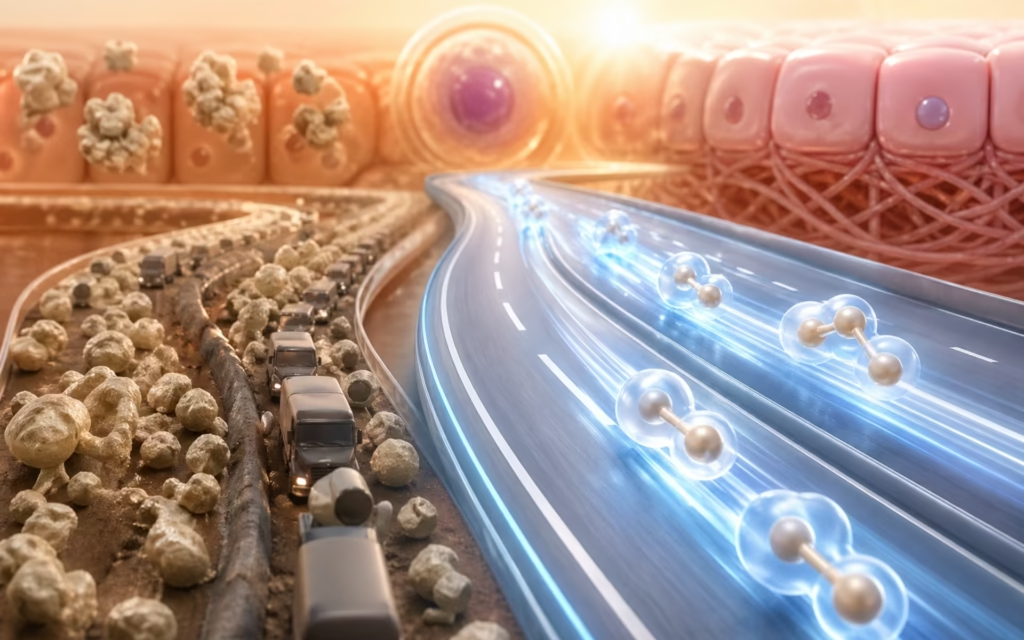
The switch from conventional collagen peptides to true tripeptides is comparable to switching from an extremely bumpy, traffic-jammed country road to the clear, unrestricted fast lane of the highway. The benefits for your cellular nutrition aren’t just marginal; they are massive:
- Direct, active absorption: Normal amino acids must be painstakingly funneled individually through the intestinal wall. Tripeptides, on the other hand, are so tiny and have such a specific structure that they can be ushered directly into the bloodstream like VIP guests via very special transport mechanisms (the so-called PEPT1 transporters) in the intestine.
- No dramatic digestive loss: Because they don’t have to be further broken down in hours of work by the stomach and enzymes, hardly any valuable material is lost during digestion. The bioavailability (i.e., the amount that actually arrives in the blood) is many times higher than with conventional collagen supplements.
- Maximum efficiency at a low dose: Due to the extremely high absorption rate, you often need a significantly smaller amount of powder to achieve the same or a far better nutritional effect in the body. While you often have to consume 10 to 20 grams of normal peptides daily, tripeptides achieve their peak efficiency at just a fraction of this amount.
- Direct, high-purity structural material: Once in the bloodstream, these high-purity “blocks of three” (especially the glycine-proline-hydroxyproline combinations) are immediately available to the fibroblasts (your collagen-forming cells) as ready-made, tailor-made building materials for the body’s own structural framework.
5. The Perfect Longevity Duo: Tripeptides and Nucleotides United
True vitality and fundamentally sustainable healthy aging require a holistic understanding of cell biology. At the end of the day, a strong framework is useless to you if the builders on your construction site go on strike because they lack the energy or the blueprint.
This is exactly where we come full circle to one of the most important topics in modern cell research:
- Tripeptides are the structural material: They provide the highest quality, purest, and most rapidly available bricks for your tissue, skin, connective tissue, and joint structures.
- Nucleotides are the blueprint and life energy: As explained in detail in our guide to nucleotides, nucleotides provide the DNA building blocks (the essential blueprint for every new cell) and ATP (the universal energy) so that your cells can actively build the ingested collagen material into new tissue in the first place.
The unbeatable synergy: When you combine a high-purity tripeptide collagen with essential bioactive nucleotides (like the ones you find in SBN Longevity or SBN Biome, for example), you reach the absolute premier class of nutritional support. You support normal, healthy cell division and energy provision deep within the core of the cell, while simultaneously providing the body with highly bioavailable structural material to scientifically support the firmness and elasticity of your tissues from the inside out.
6. The Great Comparison: Conventional Collagen vs. Tripeptides
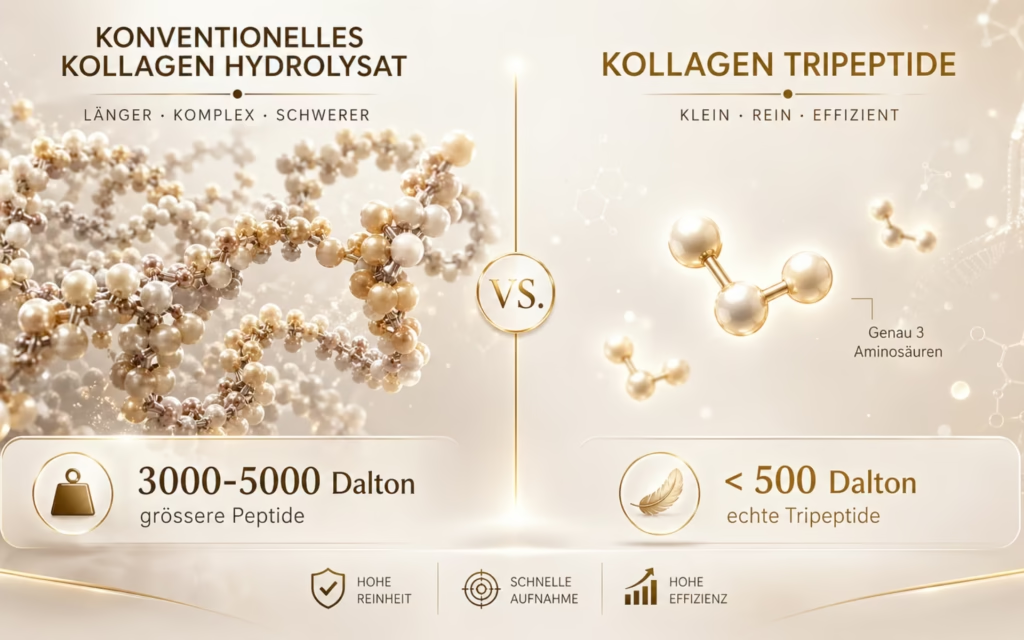
So that you, as a consumer, can accurately and transparently understand why we choose this highly complex scientific approach and set ourselves apart from conventional supermarket products, we have clearly outlined the most important differences for you here:
| Feature / Criterion | Conventional Collagen Hydrolyzate (Normal Peptides) | High-Purity Tripeptide Collagen (The Innovation) |
| Molecular Size & Weight | Medium to large (longer amino acid chains, often 3000 to 5000 Daltons). | Extremely small (consists of exactly 3 amino acids, usually < 500 Daltons). |
| Effort Required for Digestion | High. The powder must first be painstakingly broken down into smaller, absorbable parts in the small intestine. | Minimal. The tiny building blocks are already small enough for direct absorption. |
| Bioavailability (Absorption into the Blood) | Sometimes severely limited, as a lot of material is lost unused during the long digestion process. | Very high Uses direct transport pathways (PEPT1) through the intestinal mucosa into the bloodstream. |
| Relevance of Collagen Type (I, II, III) | None (is completely broken down into its individual parts and mixed during digestion anyway). | None. The body builds exactly what it acutely needs from the highly available tripeptides. |
| Nutritional Efficiency & Dosage | You often need very large amounts (10g – 20g per day) to achieve any noticeable effects at all. | Due to the direct, loss-free absorption, a significantly lower, but highly potent dosage is often sufficient. |
7. What You Absolutely Must Look For When Choosing a Collagen Product
If, after careful consideration, you decide to nutritionally support your structural foundation, your skin, and your joints as part of a healthy aging routine, you should make absolutely no compromises when it comes to quality.
At NucleoViva (FIRSTSWISSVENTURES AG), we always focus on the essentials: true science, uncompromising purity, and maximum efficacy for your cells.
- Ignore empty marketing promises about “types”: Don’t be blinded by whether it says “Type I” or “Type II” in big letters on the tub. Instead, pay attention to the molecular size and the scientifically proven bioavailability
- Look explicitly for tripeptides: They aren’t just a trend, but the absolute premium class of collagen supply because they minimize digestive loss.
- No unnecessary fillers: Many conventional collagen drinks or powders from the drugstore are full of hidden sugars, artificial sweeteners, flavorings, or cheap fillers that serve no purpose other than to bulk up the volume of the tub. We rely on 100% clean formulas that don’t place an additional burden on your metabolism or your gut environment.
👉 Discover our high-purity tripeptide collagen for your structural foundation here
8. Frequently Asked Questions (The Big Tripeptide Collagen FAQ)
To make these complex relationships even easier to understand, here are the answers to the most frequently asked questions from our users and health enthusiasts:
Conclusion: The Foundation for Your Healthy Aging
The science surrounding our connective tissue, our skin, and our joints has evolved rapidly in recent years. Anyone who wants to intelligently support their body today no longer relies on outdated marketing myths about collagen types, but focuses on what actually reaches the cells: bioavailability.
With tripeptides, you offer your body the purest, most rapidly available building material that modern nutritional science has to offer. Take your structural vitality into your own hands and uncompromisingly support your body from the inside out.
👉 Click here for our high-purity tripeptide collagen
Expertise & Review
This comprehensive guide was created for you with the utmost care and based on the latest nutritional science findings. The factual and scientific accuracy of this entire text—especially the complex relationships involved in the absorption of tripeptides via the gastrointestinal tract and general cell biology—has been thoroughly reviewed by Dipl. Ing. Agr. Clemens Jehle. Clemens is a former elite athlete—and today a nutrition expert focusing on vital nutrition, gut health, and prevention. Together with Dr. rer. nat. Peter Damian Koeppel and his vast expertise, he forms the reliable expert foundation of NucleoViva.
Legal Disclaimer Regarding Health Claims: The explanations of the cellular functions of collagen, proteins, and amino acids in this article are solely for general nutritional information and educational purposes. Under no circumstances do they represent medical promises of healing, anti-aging guarantees, or therapeutic recommendations. Dietary supplements are not medicinal products; therefore, they are not intended to diagnose, treat, cure, or entirely prevent diseases. If you experience health problems or are taking medication regularly, you should always consult a doctor. Furthermore, dietary supplements are not a substitute for a varied, balanced diet and a holistic, healthy lifestyle.